Ingredients (for Petromax FT6 or 12 Inch Dutch Oven)
- 6 cups (720g) Bread Flour
- 1 tsp Dry Yeast or 2 tsp Fresh Yeast
- 2½ tsp Salt
- 3¼ cups (430ml) Water
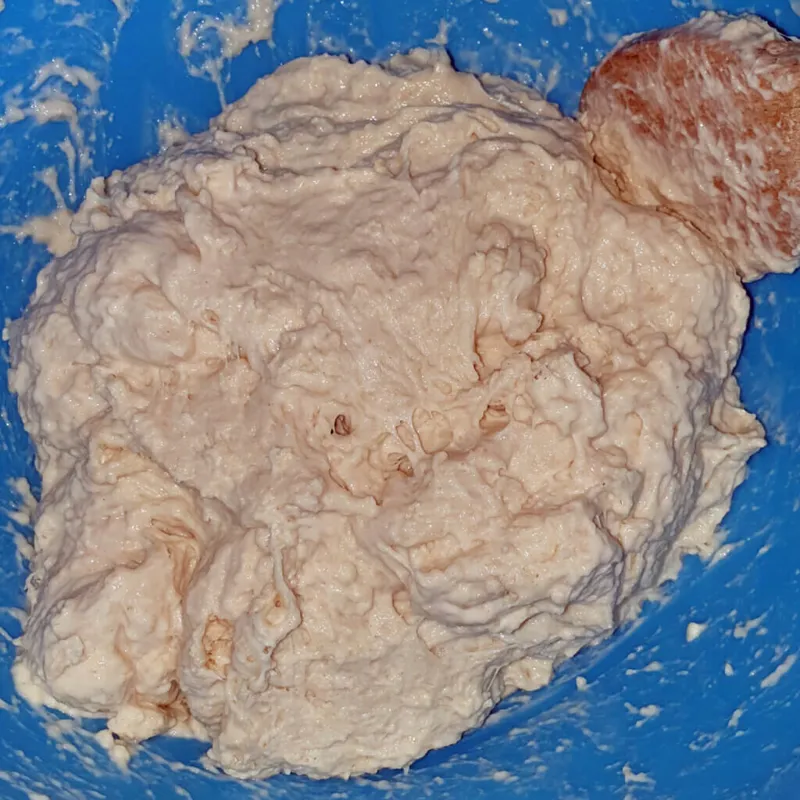
Mixing
Add flour, yeast and salt to a mixing bowl and stir together with a spoon or whisk. Add the water (ideally at around 43°C) and stir. The mixture should be runnier than a dough but more firm than a batter. It should stick to the sides of the bowl, and should jiggle if you shake the sides of the bowl. It should be wet and gloopy. To get the right consistency, add flour or water at about a quarter of a cup at a time if needed.
Long Rise (6-8 hrs)
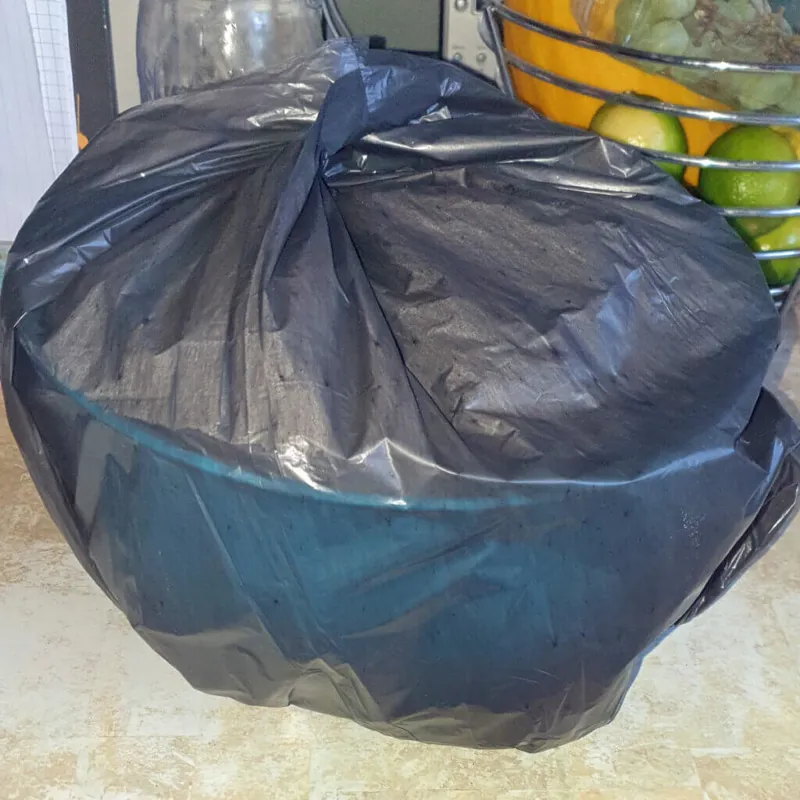
Place the bowl in a black bin bag and tuck the opening underneath. This gives a little humidity from the fermentation process and a little extra warmth from the bag (black absorbs and radiates heat). You can put the bowl in the fridge or, if camping, leave the bowl out overnight if it isn’t going to freeze (off the ground away from animals/insects). The cool temperature will allow for a slower fermentation and will make the bread taste much richer.
Shaping/Proofing
Take the dough out of the fridge and allow it to warm up for an hour. On a flat surface scatter a lot of flour then dump the risen dough onto it. It should flatten out a lot on its own. Sprinkle flour on top of the dough and flour your hands. Lift both sides of the dough up and fold them onto each other, in thirds. Let the dough flatten back out and turn the dough 90 degrees. Sprinkle more flour on top then stretch out the new sides and do the fold again. Turn it, sprinkle it and fold it a third time. Coat the bottom and sides of a bowl fairly liberally with oil and return the dough to the bowl. Replace the bowl in the bin liner and set aside for its final rise.
Baking
While the dough is proofing, start by lighting the charcoal or warming an oven to 180°C. See Petromax’s briquette guide for how much charcoal to use — you’ll need a third of the briquettes underneath and two thirds on the lid. Wipe the inside of the Dutch Oven with oil. We tend to use a trivet placed in the bottom with baking paper on top of it. Set the charcoal underneath, just under the edge at the bottom — don’t put them too far under as this creates hotspots, the heat should radiate inwards. Do the same on the lid, placing the charcoal in a circle on the outer rim.
Let the Dutch Oven heat up for 15 to 20 minutes. Remove the lid then upend the dough bowl directly over the centre of the Dutch Oven. The dough will drop in and sizzle. With a very sharp knife cut a slice or two across the top of the dough to help it expand, then quickly replace the lid. After 10 minutes, turn the lid a quarter of a turn in any direction using a lid lifter (don’t lift the lid off), then lift the Dutch Oven itself and turn it a quarter of a turn too. This repositions the bread relative to the coals, so if any are burning hotter the heat gets redistributed evenly.
After another 10 minutes, repeat turning the lid then the Dutch Oven. This time, lift the lid briefly and check the bread — look at the crust and see how brown it’s getting. If you have a short thermometer, stick it into the middle of the bread and close the lid as quickly as possible; the longer the lid is off, the more heat and steam escapes.
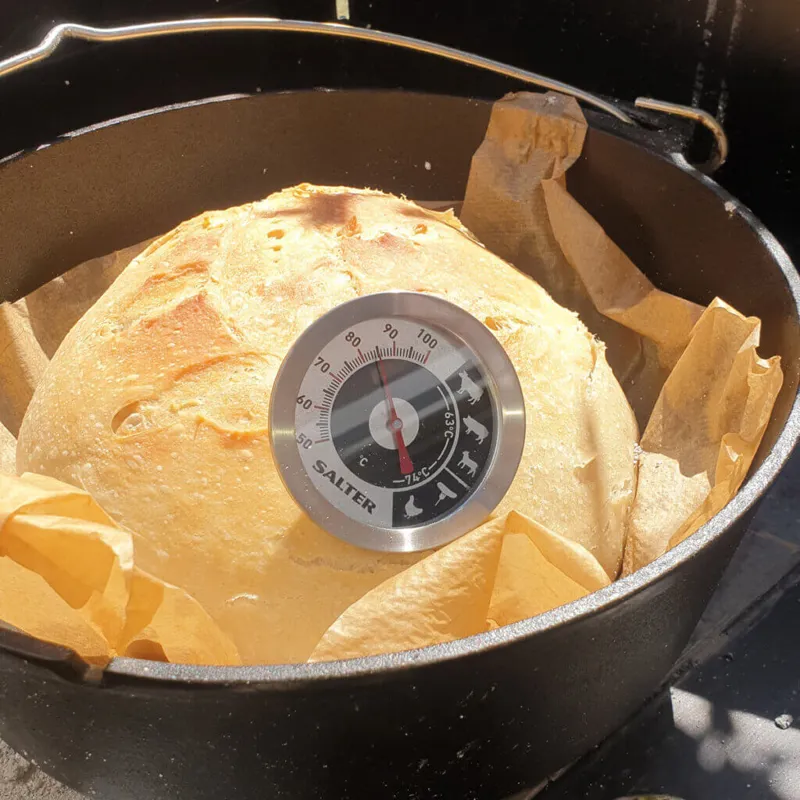
Finally, after another 10 to 15 minutes, lift the lid and check the thermometer. If it reads between 80 and 90°C the bread is done. If not, replace the lid and turn the Dutch Oven and lid like before, then check again after another 10 minutes.
Cooling
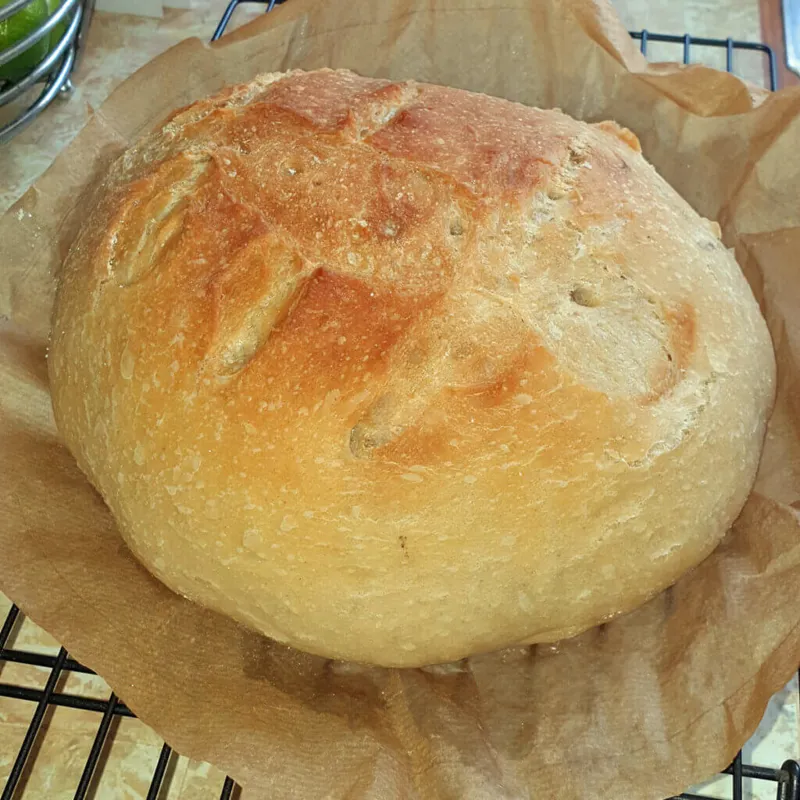
Turn the loaf out onto a cooling rack and resist the temptation to cut a slice off straight away — the bread is still cooking as it cools. While you’re waiting, clean down your Dutch Oven if needed. Once cool, enjoy!
Thanks to Paul
Paul is a regular at our Tentipi Camps and a great contributor to the Tentipi User Group, along with being a self-admitted Petromax Dutch Oven addict.